
Choosing the right web hosting solution can be a daunting task, especially with the myriad of options available. This article provides a clear comparison of three popular hosting types: shared hosting, VPS hosting (Virtual Private Server), and cloud hosting. Understanding the key differences between these options is crucial for making an informed decision that aligns with your website’s needs, technical expertise, and budget.
We will delve into the specifics of each hosting type, highlighting their advantages and disadvantages. This comparison will cover key aspects such as performance, security, scalability, control, and cost, enabling you to determine which option – shared hosting, VPS hosting, or cloud hosting – is the optimal choice for your website. Whether you are launching a new website or considering migrating an existing one, this guide will equip you with the necessary knowledge to make a confident decision.
Overview of Web Hosting Types
Choosing the right web hosting is crucial for website performance and scalability. This overview briefly explains the key differences between shared, VPS, and cloud hosting, enabling you to make an informed decision based on your specific needs.
Shared Hosting is the most basic type, where multiple websites share the resources of a single server. This is a cost-effective option for smaller websites with low traffic.
VPS (Virtual Private Server) Hosting offers a dedicated portion of a server’s resources. While still sharing a physical server, VPS provides greater control and customization compared to shared hosting.
Cloud Hosting utilizes multiple interconnected servers to host your website. This provides high availability, scalability, and redundancy, making it suitable for websites with fluctuating traffic or high performance requirements.
How Shared Hosting Works
Shared hosting is the most basic and affordable type of web hosting. Think of it like an apartment building. Many residents live in the same building, sharing resources like electricity, water, and parking. Similarly, many websites reside on a single powerful server, sharing its resources – processing power, memory, and disk space.
Your website shares these resources with numerous other websites. This means the server’s resources are divided, which can sometimes affect your website’s performance, particularly if another website on the shared server experiences a traffic surge. However, for small websites or blogs with moderate traffic, shared hosting provides an adequate and cost-effective solution.
Advantages and Disadvantages of VPS Hosting
Virtual Private Server (VPS) hosting offers a balance between shared and dedicated hosting. It provides users with a dedicated portion of a server’s resources, creating a more isolated and secure environment than shared hosting. This setup allows for greater control and customization.
Advantages
- Enhanced Performance: Dedicated resources result in faster loading speeds and improved website performance.
- Increased Security: Isolation from other users enhances security and protects against threats.
- Root Access: Provides greater control over server configuration and software installations.
- Scalability: Resources can be easily scaled up or down as needed.
Disadvantages
- Higher Cost: More expensive than shared hosting.
- Requires Technical Expertise: Managing a VPS requires some technical knowledge.
- Performance Fluctuations: Performance can still be affected by other users on the physical server, though less so than shared hosting.
What Makes Cloud Hosting Unique?

Cloud hosting distinguishes itself through its unique infrastructure. Unlike traditional hosting that relies on a single server, cloud hosting utilizes a network of interconnected servers, forming a “cloud.” This architecture offers several key advantages.
Scalability is a defining feature. Resources, such as processing power and RAM, can be easily scaled up or down on demand, adapting to fluctuating website traffic. This eliminates the limitations of a fixed server capacity.
Redundancy is another core benefit. With data mirrored across multiple servers, cloud hosting ensures high availability. If one server fails, another seamlessly takes over, minimizing downtime.
Flexibility is also paramount. Cloud hosting allows users to customize their server environment and choose specific software configurations based on their needs.
Performance and Resource Allocation
A key differentiator between these hosting types lies in performance and how resources are allocated.
Shared hosting often suffers from the “noisy neighbor” effect. Since resources are shared, one website’s excessive usage can impact the performance of others on the same server.
VPS hosting provides dedicated resources, ensuring consistent performance regardless of other users on the physical server. This isolation leads to better stability and predictability.
Cloud hosting offers the highest level of performance and scalability. Resources are dynamically allocated from a network of servers, allowing websites to handle traffic spikes and maintain uptime even under heavy load.
Pricing and Budget Considerations
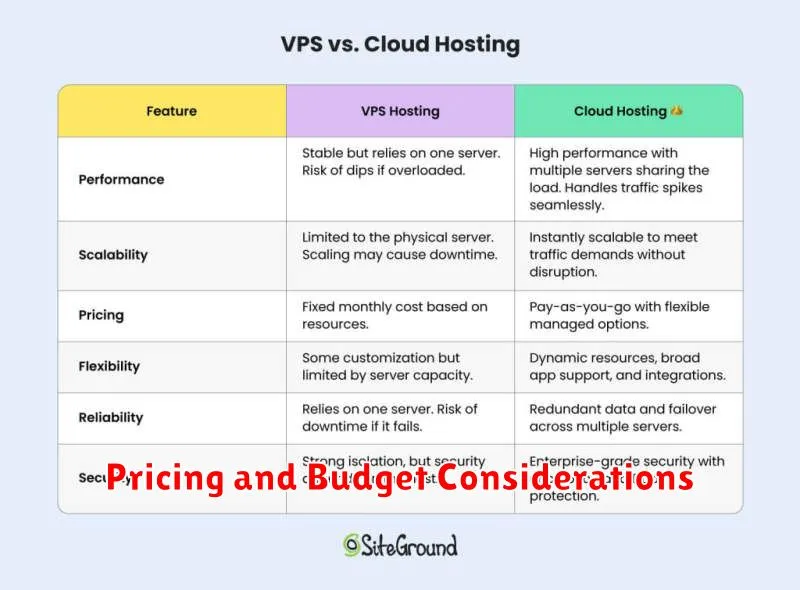
Cost is a critical factor when choosing a hosting solution. Shared hosting is generally the most affordable option, suitable for small websites and blogs with limited traffic. VPS hosting offers a balance of cost and performance, providing more resources and control at a moderate price point.
Cloud hosting is typically the most expensive option, but its scalability makes it ideal for businesses with fluctuating traffic or resource-intensive applications. Budget considerations should align with your website’s needs and anticipated growth.
Which Hosting Type Should You Choose?
Selecting the right hosting hinges on your specific needs and resources. Shared hosting suits beginners and small websites with limited traffic due to its affordability and simplicity. If you anticipate growth or require more control and performance, VPS hosting offers a balance of cost and customization. For high-traffic websites demanding maximum uptime and scalability, cloud hosting presents the most robust solution, albeit at a higher price point.
Consider these key factors: your website’s traffic volume, technical expertise, budget, and required level of control. Evaluate your current needs and anticipate future growth to make an informed decision.
