
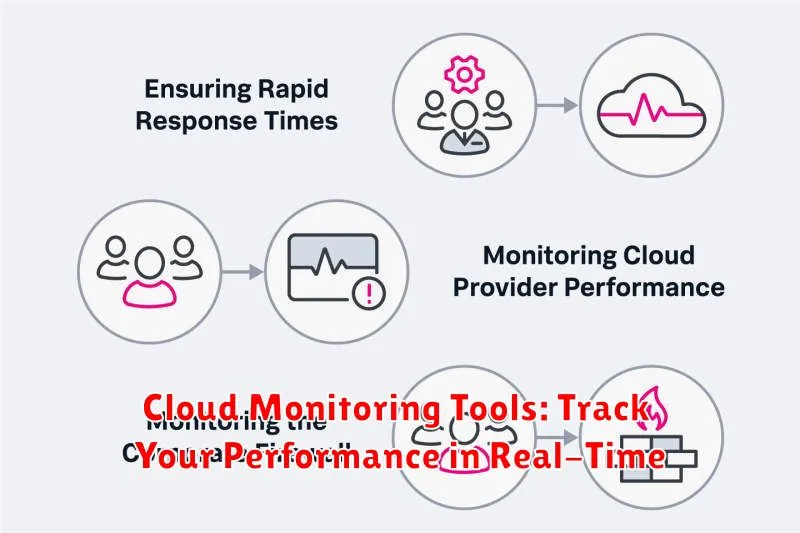
In today’s dynamic digital landscape, businesses increasingly rely on cloud infrastructure for their operational needs. Cloud monitoring tools provide essential visibility into the performance and health of your cloud-based applications and resources. Understanding the performance metrics of your cloud environment is crucial for maintaining optimal service levels, ensuring application availability, and proactively addressing potential issues before they impact your users. Effective cloud monitoring empowers you to track performance in real-time, allowing for swift identification and resolution of performance bottlenecks and outages. This proactive approach not only minimizes downtime but also optimizes resource utilization and cost efficiency.
This article delves into the importance of cloud monitoring tools and explores their capabilities in providing real-time performance insights. We will examine the key features to consider when selecting a cloud monitoring solution and discuss how these tools enable you to track performance in real-time. By leveraging the information presented here, you can make informed decisions about which cloud monitoring tools best suit your specific requirements and gain a comprehensive understanding of how they can help maintain the health and performance of your cloud infrastructure. Ultimately, effective cloud monitoring allows for improved operational efficiency, reduced costs, and enhanced user experiences.
Why Cloud Monitoring Is Essential
Cloud monitoring plays a crucial role in maintaining the health, performance, and availability of cloud-based applications and infrastructure. It provides real-time visibility into the performance of your systems, allowing you to identify and address potential issues before they impact your users.
Proactive monitoring enables you to optimize resource utilization, ensuring you only pay for what you need. It also strengthens security by detecting unusual activity and potential breaches. Furthermore, cloud monitoring is essential for meeting service level agreements (SLAs) and ensuring a positive user experience.
Through the collection and analysis of performance data, cloud monitoring tools empower organizations to make informed decisions regarding their cloud infrastructure and improve overall operational efficiency.
Top Metrics to Monitor
Effectively monitoring cloud performance requires focusing on key metrics. These provide insights into the health and efficiency of your cloud infrastructure. Availability is paramount, ensuring your services are accessible when needed. Track uptime and downtime to maintain service reliability.
Performance metrics like latency and response time directly impact user experience. Monitoring these helps identify bottlenecks and optimize application speed. Resource utilization, including CPU usage, memory usage, and disk I/O, reveals how efficiently resources are allocated. Keeping track of these metrics allows for optimized resource provisioning and cost management.
Finally, error rates offer critical insight into application stability and potential issues. Monitoring these helps identify and address bugs promptly, maintaining a healthy application environment.
Popular Cloud Monitoring Tools
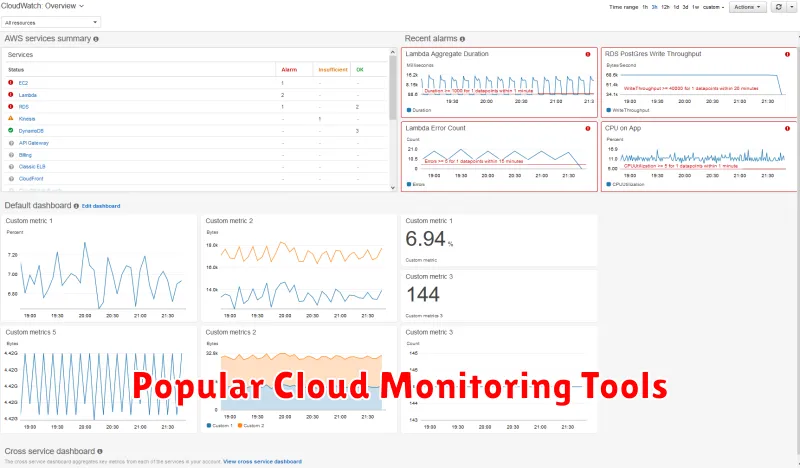
Several tools are available for monitoring cloud infrastructure and applications. Selecting the right tool depends on your specific needs and the cloud platform you are using. Here are a few popular options:
Cloud Provider Native Tools
Cloud providers offer their own monitoring solutions. These tools are often deeply integrated with the platform and provide comprehensive monitoring for services within that ecosystem. Examples include Amazon CloudWatch for AWS, Azure Monitor for Microsoft Azure, and Google Cloud Monitoring for Google Cloud Platform.
Third-Party Tools
Third-party tools offer broader cross-platform support and specialized features. Datadog, Dynatrace, and New Relic are prominent examples, providing advanced monitoring, analytics, and alerting capabilities across multiple cloud providers.
Real-Time Alerts and Notifications
Real-time alerts are crucial for maintaining the health and performance of cloud-based applications. These alerts notify you immediately of any anomalies or issues, allowing for swift intervention.
Effective cloud monitoring tools offer customizable alert thresholds based on various metrics, such as CPU usage, memory consumption, and network latency. You can configure alerts to trigger based on specific conditions, ensuring you only receive notifications for critical events.
Notification channels can vary, including email, SMS, and integrations with communication platforms. This flexibility enables teams to stay informed regardless of their location or preferred communication method.
Performance Optimization Insights
Cloud monitoring tools provide more than just real-time data; they offer valuable insights into performance bottlenecks and areas for optimization. By analyzing collected metrics, you can pinpoint specific resources or processes that are impacting overall performance.
For example, high CPU utilization on a particular virtual machine might indicate the need for vertical scaling (increasing resources) or horizontal scaling (adding more instances). Similarly, slow database query response times could point to the need for query optimization or database tuning.
These insights enable proactive optimization strategies, ensuring optimal application performance and efficient resource utilization.
Cost Monitoring and Alerts
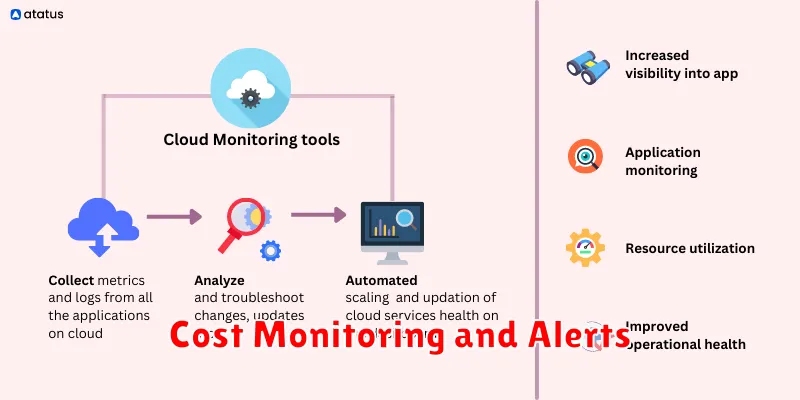
Controlling cloud expenditure is crucial for maintaining a healthy budget. Cloud monitoring tools offer cost tracking and alerting features to help manage expenses effectively.
These tools provide real-time visibility into your spending patterns, allowing you to identify potential cost overruns before they impact your budget. You can set budget thresholds and configure alerts to notify you when costs approach or exceed predefined limits.
Some tools even offer forecasting capabilities to predict future cloud costs based on current usage trends. This proactive approach allows you to optimize resource allocation and prevent unexpected expenses.
Security Logs and Threat Detection
Security logs are crucial for maintaining a secure cloud environment. They provide a detailed record of events occurring within your cloud infrastructure, enabling you to identify suspicious activities and potential threats.
Effective cloud monitoring tools offer robust security log management capabilities. These tools collect, aggregate, and analyze logs from various sources, including virtual machines, databases, and network devices. This centralized view allows for comprehensive threat detection.
Look for tools that offer real-time alerting for security-related events. This proactive approach ensures immediate notification of potential breaches and allows for swift mitigation.
