
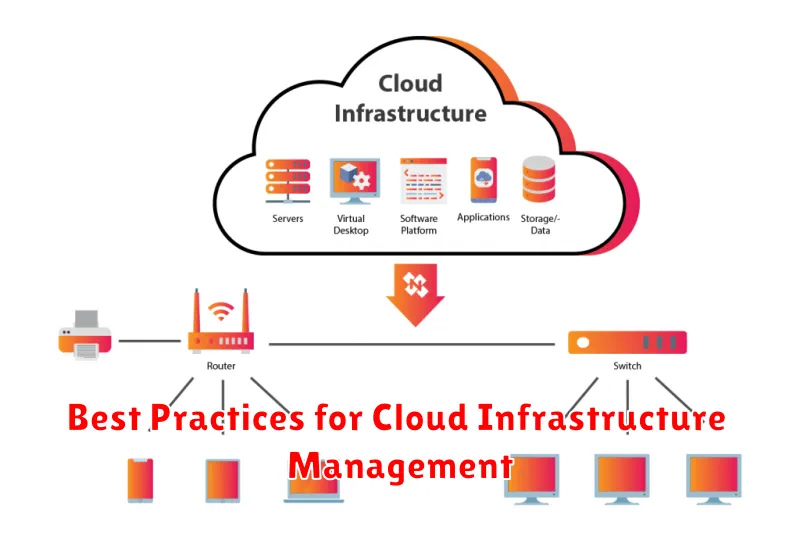
Managing cloud infrastructure effectively is crucial for organizations seeking to leverage the scalability, cost-efficiency, and agility of the cloud. Best practices for cloud infrastructure management encompass a range of disciplines, from initial planning and deployment to ongoing monitoring, optimization, and security. Understanding these best practices is essential for achieving optimal performance, minimizing costs, and ensuring the security and compliance of your cloud environment. Whether you’re migrating existing infrastructure or building new applications in the cloud, adhering to proven methodologies is key to success. This article will explore the most critical best practices for cloud infrastructure management, providing valuable insights to help you navigate the complexities of the cloud landscape.
The following sections will delve into specific best practices, covering areas such as automation, cost management, security hardening, and disaster recovery. By implementing these strategies, organizations can maximize the benefits of their cloud investments, mitigate risks, and ensure long-term success in the cloud. We’ll explore how to effectively manage cloud resources, implement robust security measures, and maintain compliance with industry regulations. Through a comprehensive overview of cloud infrastructure management best practices, this article aims to equip you with the knowledge and tools necessary to optimize your cloud strategy and achieve your business objectives.
Understanding Cloud Infrastructure Layers
Cloud infrastructure is typically categorized into distinct layers, each serving a specific purpose. Understanding these layers is crucial for effective cloud management.
At the base lies the physical layer consisting of the hardware (servers, networking equipment, storage devices). This layer is managed by the cloud provider.
Above this is the virtualization layer, abstracting the physical resources into virtual instances. This layer allows for flexibility and scalability.
The platform layer provides services for application development and deployment, such as databases, middleware, and runtime environments.
Finally, the application layer resides at the top, where your applications run. You manage and control this layer directly.
Monitoring and Performance Tracking
Effective cloud infrastructure management necessitates robust monitoring and performance tracking. This involves continuous surveillance of key metrics to ensure optimal performance and resource utilization.
Implement comprehensive monitoring tools that provide real-time visibility into system health, resource consumption, and application performance. Track metrics such as CPU usage, memory utilization, network latency, and disk I/O. Establish baselines and thresholds to proactively identify and address potential performance bottlenecks.
Regularly analyze performance data to identify trends and optimize resource allocation. Leverage automated alerting systems to receive notifications of performance deviations and potential issues. This proactive approach enables swift remediation and minimizes downtime.
Cost Management Strategies
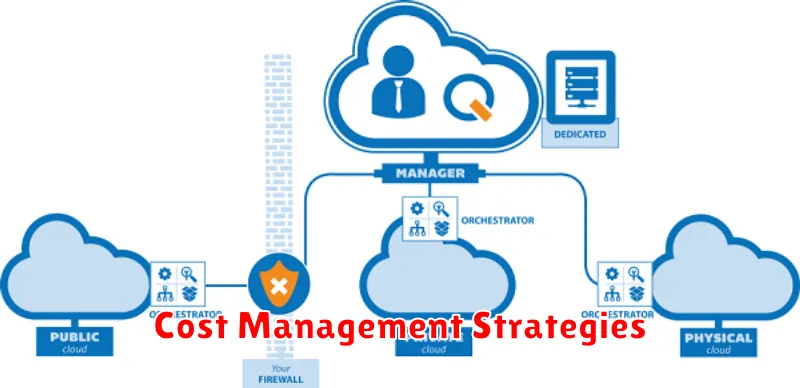
Effectively managing cloud costs is crucial for maximizing your return on investment. Budgeting and forecasting are foundational practices. Establish clear budget limits and regularly forecast future spending based on usage trends.
Right-sizing your resources is essential. Analyze your resource utilization and choose the appropriate instance sizes and storage options. Avoid over-provisioning and leverage features like auto-scaling to dynamically adjust resources based on demand.
Take advantage of cost optimization tools provided by your cloud provider. These tools offer insights into spending patterns, identify potential savings, and recommend adjustments. Regularly review your cost reports to track expenses and identify areas for improvement.
Security and Compliance Monitoring
Continuous security and compliance monitoring is crucial for maintaining a secure and compliant cloud infrastructure. This involves implementing tools and processes to track security events, identify vulnerabilities, and ensure adherence to regulatory requirements.
Real-time monitoring of security logs, access controls, and network traffic helps detect and respond to security threats promptly. Automated alerting mechanisms can notify administrators of suspicious activities or policy violations. Regular vulnerability scanning and penetration testing are also essential for proactive security management.
Compliance monitoring ensures that the cloud infrastructure meets industry-specific regulations and standards, such as HIPAA, PCI DSS, or GDPR. This includes tracking configurations, access permissions, and data handling practices. Automated compliance auditing tools can streamline the process of demonstrating adherence to these standards.
Automation and Orchestration Tools
Automation and orchestration tools are crucial for efficient cloud infrastructure management. They streamline operations, reduce manual errors, and enhance scalability.
Automation tools handle individual tasks, such as server provisioning or software installation. Orchestration tools, on the other hand, coordinate multiple automated tasks to manage complex workflows and dependencies.
Selecting the right tools is essential. Consider factors like your specific cloud environment (AWS, Azure, GCP), the complexity of your infrastructure, and your team’s expertise.
Disaster Recovery and Backup Plans
A robust disaster recovery (DR) plan is essential for business continuity in the cloud. This plan should outline procedures for recovering data and applications in the event of a major outage or disaster. Recovery Time Objective (RTO) and Recovery Point Objective (RPO) must be clearly defined. RTO specifies the maximum acceptable downtime, while RPO defines the maximum acceptable data loss.
Regular backups are the cornerstone of any DR plan. Automated backup solutions should be implemented to ensure consistency and minimize manual effort. Backups should be tested regularly to validate their integrity and recoverability. Consider using geographically redundant storage for added resilience against regional outages.
Documentation and Team Collaboration
Thorough documentation is crucial for effective cloud infrastructure management. Documenting every aspect of your setup, from architecture diagrams to security policies, facilitates knowledge sharing, troubleshooting, and future modifications. Maintain an up-to-date inventory of cloud resources and configurations.
Team collaboration plays a vital role in successful cloud management. Establish clear communication channels and utilize collaboration tools. Define roles and responsibilities for each team member to ensure accountability and streamline operations. Regular meetings and status updates promote transparency and efficient problem-solving.
