
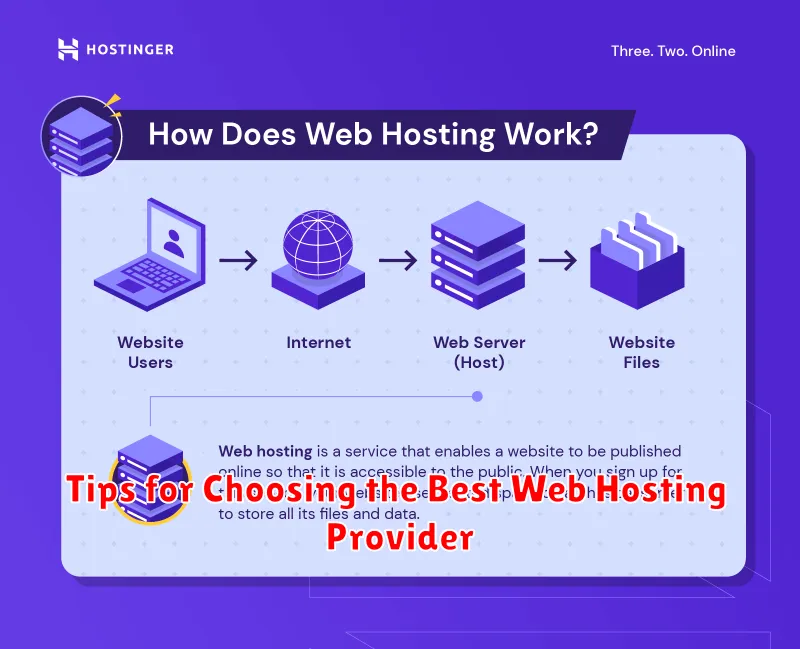
Choosing the best web hosting provider can be a daunting task, especially with the plethora of options available. Making the right decision is critical for the success of your website. The best web hosting provider will offer a combination of reliable uptime, fast loading speeds, robust security features, and excellent customer support. This guide will provide you with essential tips to navigate the complexities of selecting the ideal web hosting solution for your specific needs, whether you’re launching a new blog, building an e-commerce platform, or managing a complex business website.
This article will delve into the key factors to consider when evaluating different web hosting providers. Understanding these factors, including pricing plans, storage space, bandwidth limitations, and scalability options, will empower you to make an informed choice. By following these tips, you can select the best web hosting provider to ensure optimal performance, security, and scalability for your online presence. We will cover various types of web hosting, such as shared hosting, VPS hosting, dedicated hosting, and cloud hosting, helping you understand which type best suits your requirements and budget.
Understanding Your Website Needs
Before selecting a web hosting provider, it’s crucial to understand your website’s specific requirements. This will help you choose a plan that aligns with your needs and avoids unnecessary expenses.
Consider the following factors:
- Website Type: Is it a blog, e-commerce store, portfolio, or forum?
- Traffic Expectations: Anticipate the number of visitors you expect.
- Storage Requirements: Estimate the amount of storage space you’ll need for files, images, and databases.
- Technical Needs: Determine if you require specific software, databases, or programming language support.
By carefully evaluating these aspects, you can effectively narrow down your options and choose a web hosting provider that offers the right features and resources for your website’s success.
Important Features to Look For
When selecting a web hosting provider, several key features contribute to a positive experience. Uptime is crucial; look for a provider guaranteeing at least 99.9% uptime. Customer support should be readily available and responsive, ideally 24/7 via phone, email, or live chat.
Storage space and bandwidth should align with your website’s needs. Consider future growth when assessing these requirements. Security features, such as SSL certificates and malware protection, are essential for protecting your website and user data.
A user-friendly control panel simplifies website management tasks. Finally, consider the hosting provider’s pricing structure and ensure it fits within your budget.
Uptime and Server Reliability

Uptime is a crucial factor when selecting a web hosting provider. It represents the percentage of time your website is online and accessible to visitors. Look for providers that guarantee at least 99.9% uptime. Lower uptime can negatively impact your website’s visibility and user experience.
Closely related to uptime is server reliability. This refers to the stability and performance of the servers hosting your website. Reliable servers ensure consistent performance and minimize downtime caused by hardware or software failures. Inquire about the provider’s infrastructure, redundancy measures, and disaster recovery plans.
Customer Support and Service Quality
Reliable customer support is crucial when choosing a web hosting provider. Problems can arise at any time, and you need to know you can get assistance promptly. Look for providers offering 24/7 support via multiple channels like phone, email, and live chat.
Investigate the quality of their support. Check online reviews and forums for feedback from other customers. A provider with a reputation for helpful and efficient support can save you time and frustration in the long run.
Consider the availability of self-service resources. A comprehensive knowledge base, FAQs, and tutorials can empower you to resolve common issues independently.
Security Features Offered

Security is paramount when selecting a web hosting provider. A secure hosting environment protects your website and user data from various threats.
Look for providers offering features like:
- SSL Certificates: These encrypt data transmitted between the user’s browser and the server, indicated by the padlock icon in the address bar.
- Firewalls: These act as a barrier against unauthorized access attempts and malicious traffic.
- Malware Scanning and Removal: Regular scans detect and eliminate malware that could compromise your site.
- DDoS Protection: Distributed Denial of Service (DDoS) attacks can overwhelm your server, making your website unavailable. A good provider should offer protection against these attacks.
- Data Backups: Regular backups ensure you can restore your website in case of data loss due to technical issues or security breaches.
Scalability for Future Growth
As your website grows, its resource needs will also increase. Choosing a hosting provider that offers scalability is crucial. This means they can easily accommodate increased traffic, data storage, and processing power without performance degradation.
Consider whether you need vertical scaling (upgrading your existing server resources) or horizontal scaling (adding more servers to distribute the load). A good provider will offer flexible options to meet your evolving needs.
Think about your long-term goals. Even if you’re starting small, choose a provider that can handle substantial growth to avoid the hassle of migrating your website later.
Checking Reviews and Reputation
A web hosting provider’s reputation is a crucial factor in your decision-making process. Thoroughly research potential providers by exploring various online review platforms.
Look for recurring themes in customer feedback. Are there consistent complaints about downtime, poor customer service, or hidden fees? Positive reviews highlighting reliability, speed, and effective support are excellent indicators of a reputable provider.
Pay attention to how the company responds to negative reviews. A proactive and helpful response can demonstrate a commitment to customer satisfaction, even in challenging situations.
