
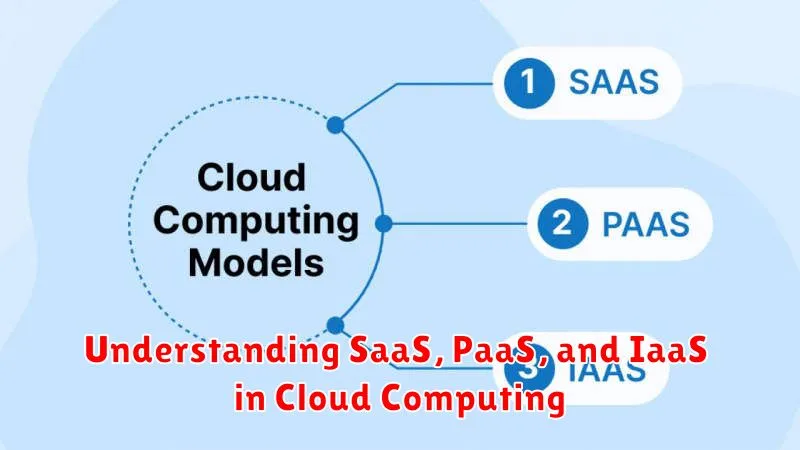
Navigating the world of cloud computing can feel overwhelming with the plethora of acronyms and services available. This article aims to provide a clear and concise understanding of three core cloud service models: Software as a Service (SaaS), Platform as a Service (PaaS), and Infrastructure as a Service (IaaS). Understanding the distinctions between these models is crucial for businesses and individuals seeking to leverage the power and flexibility of the cloud. Whether you are exploring cloud solutions for your business, expanding your technical knowledge, or simply seeking clarification, this guide will equip you with the fundamental knowledge needed to differentiate between SaaS, PaaS, and IaaS.
This comprehensive overview will delve into the specifics of each service model, highlighting their key features, benefits, and use cases. By comparing SaaS, PaaS, and IaaS, we will illuminate the various levels of control, responsibility, and management involved in each. This article will empower you to make informed decisions about which cloud service model best aligns with your specific needs, technical expertise, and budget constraints. Join us as we explore the intricacies of cloud computing and demystify the world of SaaS, PaaS, and IaaS.
What Are SaaS, PaaS, and IaaS?
SaaS, PaaS, and IaaS are three fundamental service models in cloud computing. They represent varying levels of abstraction, offering different degrees of control and responsibility to the user.
Software as a Service (SaaS) provides ready-to-use applications over the internet. Users consume software without managing underlying infrastructure. Think email clients, CRM software, and collaborative platforms.
Platform as a Service (PaaS) offers a development environment and tools for building, deploying, and managing applications. Users don’t manage infrastructure but control the deployed applications and configurations. This is ideal for developers.
Infrastructure as a Service (IaaS) provides on-demand computing resources like virtual machines, storage, and networking. Users manage the operating system, applications, and data. This offers the greatest level of flexibility and control.
Core Differences Between the Models
The core differences between SaaS, PaaS, and IaaS lie in the level of control and management provided to the user. SaaS offers the least control, delivering ready-to-use applications over the internet. Users manage application configurations, but not the underlying infrastructure.
PaaS provides a platform for developing and deploying applications. Users manage the applications and data, while the provider handles the operating system, servers, and storage. This offers more control than SaaS but less than IaaS.
IaaS grants the most control. Users manage the entire infrastructure, including servers, operating systems, storage, and networking. While offering maximum flexibility, IaaS requires significant technical expertise.
When to Use SaaS for Your Business
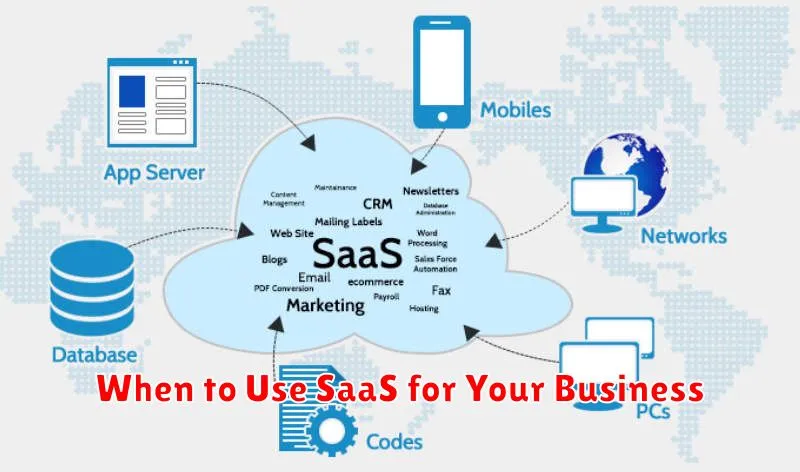
Software as a Service (SaaS) offers compelling advantages for businesses of all sizes. Consider SaaS when you need rapid deployment and want to avoid the complexities of managing hardware and software.
SaaS excels for short-term projects, applications with predictable scaling needs, and when reducing upfront costs is a priority. If your business requires quick access to software without substantial IT investment, SaaS is often the ideal choice.
SaaS is also highly beneficial for businesses that require collaboration tools accessible anytime, anywhere. Solutions like email platforms, project management software, and customer relationship management (CRM) systems are prime examples of applications where SaaS shines.
Benefits of Platform as a Service (PaaS)
PaaS offers several key advantages for developers and businesses. It provides a managed environment where developers can focus solely on building and deploying applications without worrying about infrastructure management. This significantly reduces operational overhead and accelerates development cycles.
Scalability is another major benefit. PaaS platforms automatically scale resources based on application demand, ensuring optimal performance and cost-efficiency. Furthermore, PaaS solutions typically offer a wide range of pre-built tools and services, simplifying development and integration tasks.
PaaS also promotes cost savings by eliminating the need for upfront hardware investments and reducing ongoing maintenance costs. Finally, its inherent collaboration features make it easier for development teams to work together effectively, regardless of location.
Infrastructure as a Service Explained
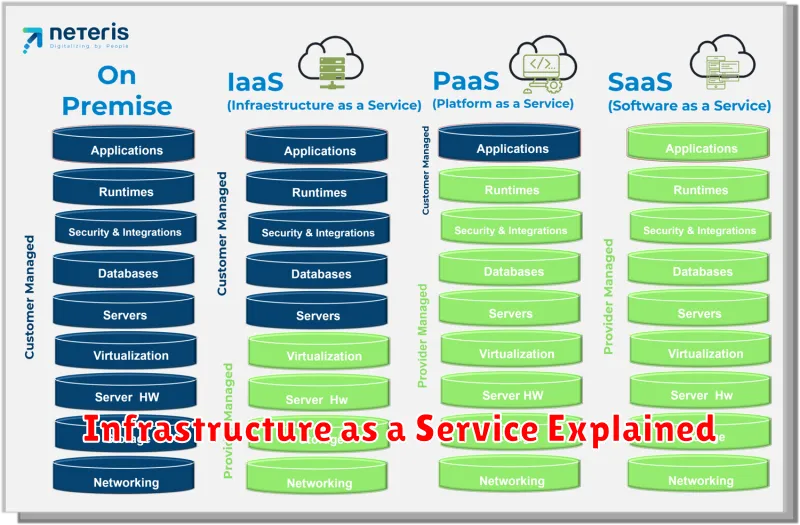
Infrastructure as a Service (IaaS) is the most basic cloud service model. With IaaS, you rent IT infrastructure—servers, virtual machines (VMs), storage, networks, and operating systems—from a cloud provider on a pay-as-you-go basis.
Control: IaaS offers the greatest level of control over your computing resources. You are responsible for managing everything from the operating system up, including applications, data, runtime, middleware, and databases.
Responsibility: While the cloud provider manages the underlying infrastructure like physical hardware, power, and cooling, you are responsible for managing the operating systems, applications, and data.
Benefits: Key benefits of IaaS include scalability, cost-effectiveness, increased speed and agility, and disaster recovery.
Cost and Scalability Factors
Cost and scalability are crucial factors when choosing between SaaS, PaaS, and IaaS. SaaS typically has the lowest upfront cost with subscription-based pricing, offering excellent scalability as the vendor manages the infrastructure. However, customization options can be limited.
PaaS offers more control and flexibility than SaaS, requiring more upfront investment but allowing for better cost optimization over time. Scalability is also strong, with users managing applications while the vendor handles the underlying infrastructure.
IaaS presents the highest initial cost and management overhead, as users are responsible for everything from the operating system upwards. This offers maximum control and customization, along with granular scalability options, making it suitable for complex and demanding applications.
Choosing the Right Model for Your Needs
Selecting between SaaS, PaaS, and IaaS depends largely on your specific requirements and resources. Consider the level of control you need, your in-house IT expertise, and your budget.
SaaS is ideal for organizations that prioritize ease of use and minimal management. It’s a good fit if you don’t have extensive IT resources or if you need a solution quickly.
PaaS offers more control and customization options, making it suitable for development teams. You manage the applications and data, while the provider handles the underlying infrastructure.
IaaS provides the most flexibility and control. It’s best suited for organizations with robust IT departments that want complete control over their environment and require specialized configurations.
