
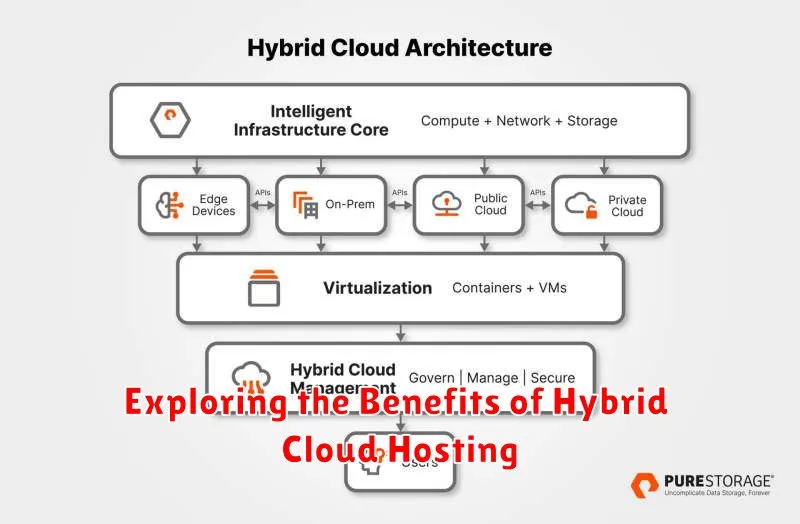
In today’s dynamic technological landscape, businesses constantly seek flexible and scalable IT infrastructure solutions. Hybrid cloud hosting has emerged as a powerful approach, offering organizations the ability to leverage the strengths of both public cloud and private cloud environments. Exploring the benefits of hybrid cloud hosting can reveal significant advantages for businesses looking to optimize their IT operations, improve scalability, and enhance security.
This article delves into the multifaceted world of hybrid cloud hosting, examining its core components and the various ways businesses can benefit from this adaptable model. We will explore how strategically integrating public cloud resources with a private cloud infrastructure allows organizations to achieve greater agility, enhance data security, and improve cost efficiency. Understanding the potential of hybrid cloud solutions is crucial for organizations seeking to navigate the complex world of modern IT infrastructure.
What Is Hybrid Cloud Hosting?
Hybrid cloud hosting combines the strengths of both private and public cloud environments. It allows businesses to maintain sensitive data and applications on a private cloud while leveraging the scalability and cost-effectiveness of a public cloud for less critical resources.
This flexible approach offers greater control over data security and compliance while providing the ability to burst to the public cloud during periods of high demand. This hybrid model allows for optimized resource allocation and improved overall efficiency.
Combining Public and Private Clouds
Hybrid cloud hosting represents the integration of public and private cloud environments. This approach allows businesses to strategically leverage the strengths of both models. Sensitive data and critical applications can reside within the security of a private cloud, while less sensitive workloads can benefit from the scalability and cost-effectiveness of a public cloud.
This combined approach offers significant flexibility. Organizations can burst workloads to the public cloud during periods of peak demand, optimizing resource utilization and minimizing costs. Furthermore, hybrid cloud facilitates disaster recovery solutions, with the public cloud serving as a readily available backup environment.
Security and Flexibility Benefits
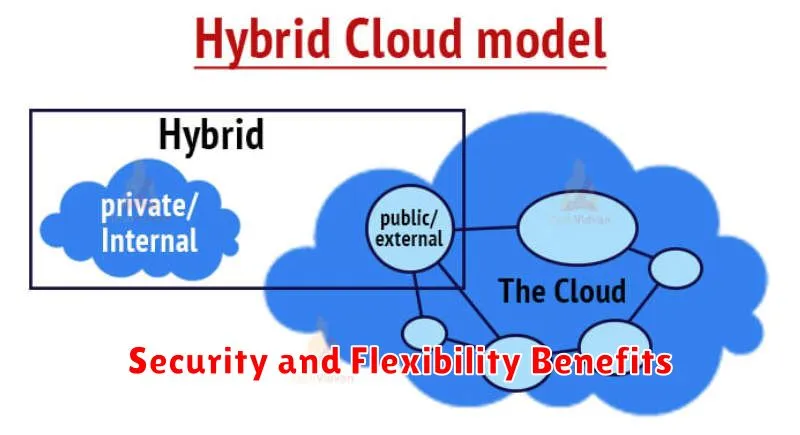
Hybrid cloud hosting offers compelling advantages in terms of security and flexibility. By strategically distributing workloads across private and public clouds, organizations gain enhanced security postures. Sensitive data can reside within the private cloud’s controlled environment, while less critical applications can leverage the public cloud’s scalability.
This approach also provides remarkable flexibility. Businesses can adapt to fluctuating demands by seamlessly shifting resources between cloud environments. During peak periods, applications can burst into the public cloud, while during lulls, resources can return to the private cloud for cost optimization. This dynamic resource allocation enhances operational efficiency and reduces overall IT expenditure.
Use Cases in Enterprises
Hybrid cloud hosting offers versatile solutions for diverse enterprise needs. Disaster recovery leverages the cloud as a secondary site for failover, ensuring business continuity.
Data intensive operations like big data analytics can benefit from the cloud’s scalability, while sensitive data remains on-premises. DevOps teams leverage hybrid environments for flexible development and testing.
Regulated industries can maintain compliance by keeping sensitive data on private infrastructure while using the cloud for less critical applications.
Integration with On-Premise Infrastructure
A key advantage of hybrid cloud hosting is its seamless integration with existing on-premise infrastructure. This allows businesses to gradually transition to the cloud, avoiding disruptive overhauls.
Connectivity between the on-premise environment and the cloud provider is crucial. Several options exist, including VPNs, direct connects, and dedicated lines. Choosing the right connection depends on factors like security requirements, bandwidth needs, and budget.
Data synchronization ensures consistency across both environments. This is especially important for applications that span both on-premise servers and the cloud. Careful planning and implementation are essential to ensure data integrity and minimize latency.
Managing Hybrid Environments
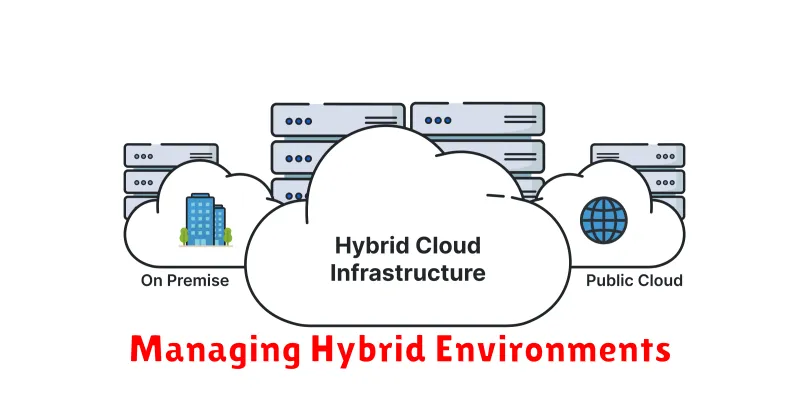
Managing a hybrid cloud environment presents unique challenges. It requires a unified management platform capable of overseeing both on-premises and cloud-based resources. This includes consistent security policies, orchestration, and monitoring across both environments.
Key considerations for managing hybrid cloud include:
- Visibility: Maintaining clear visibility across all parts of the hybrid environment is crucial.
- Control: Centralized control over resources and applications is essential for efficient operations.
- Security: Implementing robust security measures across both environments is paramount.
Effective hybrid cloud management tools simplify these tasks, allowing organizations to leverage the benefits of both cloud and on-premises infrastructure while minimizing complexity.
Future of Hybrid Cloud
The future of hybrid cloud computing appears bright, driven by several key trends. Edge computing will become increasingly integrated with hybrid cloud environments, allowing for faster processing and lower latency closer to data sources. This will be crucial for applications like IoT and real-time analytics.
Serverless computing is another area poised for growth within hybrid cloud, enabling organizations to further optimize resource allocation and reduce operational overhead. The increasing sophistication of AI and machine learning will also drive innovation in hybrid cloud management, leading to more automated and intelligent orchestration of workloads across environments.
Finally, a continued emphasis on security and compliance will shape the evolution of hybrid cloud. Enhanced security measures and advanced data encryption techniques will be paramount for ensuring data integrity and protecting sensitive information within these complex environments.
